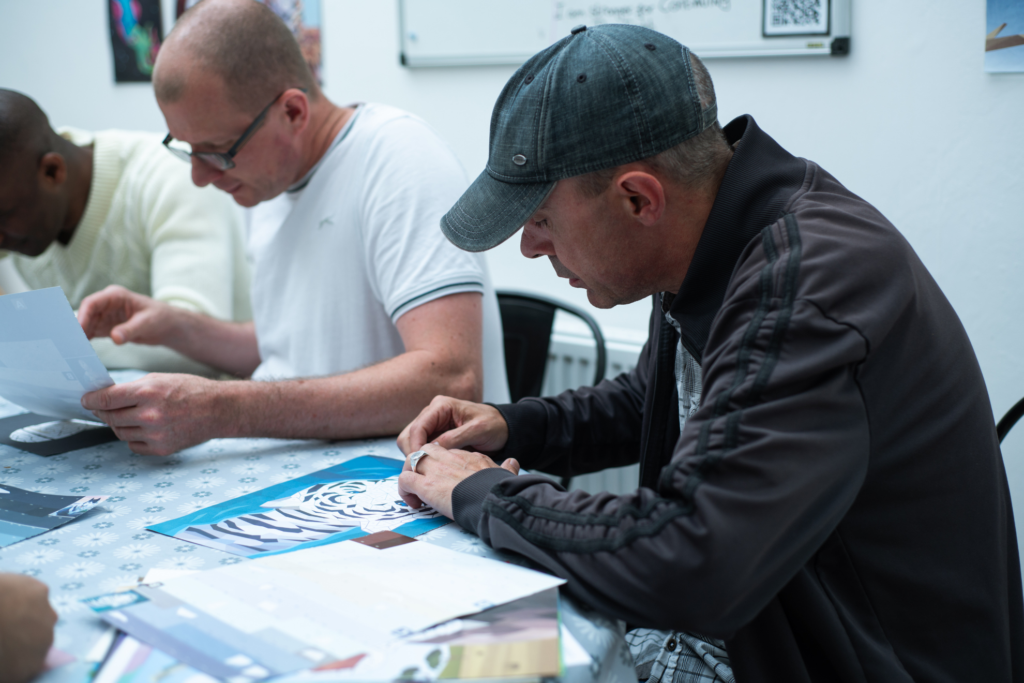
After 30 years of addiction, Mike is now four years into recovery and volunteering, helping others take their first steps forward.
*names in this article have been changed to protect client anonymity
For much of his adult life, Mike struggled with an addiction to amphetamines. What began when he was 18 gradually became a routine that shaped his life for the next three decades. Today, things look very different.
Four years into recovery, Mike volunteers supporting recovery groups and uses his lived experience to help others. Looking back on his journey, he says recovery has been about much more than stopping using substances. It has been about understanding himself, rebuilding relationships and finding purpose again.
Looking for belonging
Mike first began using amphetamines in his late teens. What started as occasional use slowly grew over time. He knew it wasn’t just about the substances. Mike said, “When I started taking amphetamines, I thought, ‘This is the answer.’ It made me feel wanted and part of something.”
The impact of addiction
As the years passed, Mike’s relationships became strained and he experienced homelessness. Addiction took more and more from him.
“It will take away everything in your life and just leave you with the drugs,” he says. “Eventually, it will take your life if you let it.”
Finding the right support
Mike spent several years trying to access help, initially through his GP, but found it difficult to get the support he needed. Eventually, a support worker recognised what he was going through and helped him access rehab.
Mike completed a 12-week programme, where counselling helped him recognise that his substance use was connected to experiences and feelings he had not previously understood. “It was a lightbulb moment,” he says.
For the first time, he began to understand that he had been carrying unresolved trauma from his childhood and time spent in care. Substance use became a way of coping and finding connection when he struggled to feel accepted elsewhere.
Recovery is a journey
Mike is open about the fact that recovery has not always been straightforward. After leaving rehab, he experienced a relapse while struggling with boredom and isolation.
Instead of giving up, he reached out for support and continued with his recovery journey. Four years later, he remains focused on building a positive future.
One lesson has stayed with him throughout that time: “The worst thing you can do is be lonely and not have things to do.” Keeping busy, connecting with others and finding purpose have all played an important role in helping him maintain his recovery.
Rebuilding what matters most
One of the things Mike values most is the relationship he has rebuilt with his family. Today, he spends meaningful time with those closest to him and is grateful for the moments he was able to share with his father before he passed away.
Speaking about the relationship he now has with his family, he says: “The time we have now is absolutely brilliant.” Recovery has allowed him to be fully present in a way he wasn’t before.
Giving back through volunteering
Mike’s experience inspired him to support others experiencing difficulties with drugs or alcohol use.
“If you can get someone out of addiction earlier, or even just plant the seed, that’s the main thing. There’s a real power in connecting with people who have lived experience of recovery. It shows that change is possible.”
A message for Addiction Awareness Week
“If you’re struggling, keep asking until you get the right answer. Just keep looking. It’s important not to give up.”
For Mike, recovery hasn’t been about creating a perfect life. It’s been about finding connection, purpose and the chance to be present for the people who matter most. Today he is helping others take those same first steps forward, showing that change is possible, however long the journey has been.
—
If you’ve been affected by anything in this article and need help, you don’t have to do this alone. Get in touch. We’re here to listen and help.
Email: info@emergingfutures.org.uk
Tel: 03330 124 714